
The Mitosome: Life with the Smallest Mitochondrion
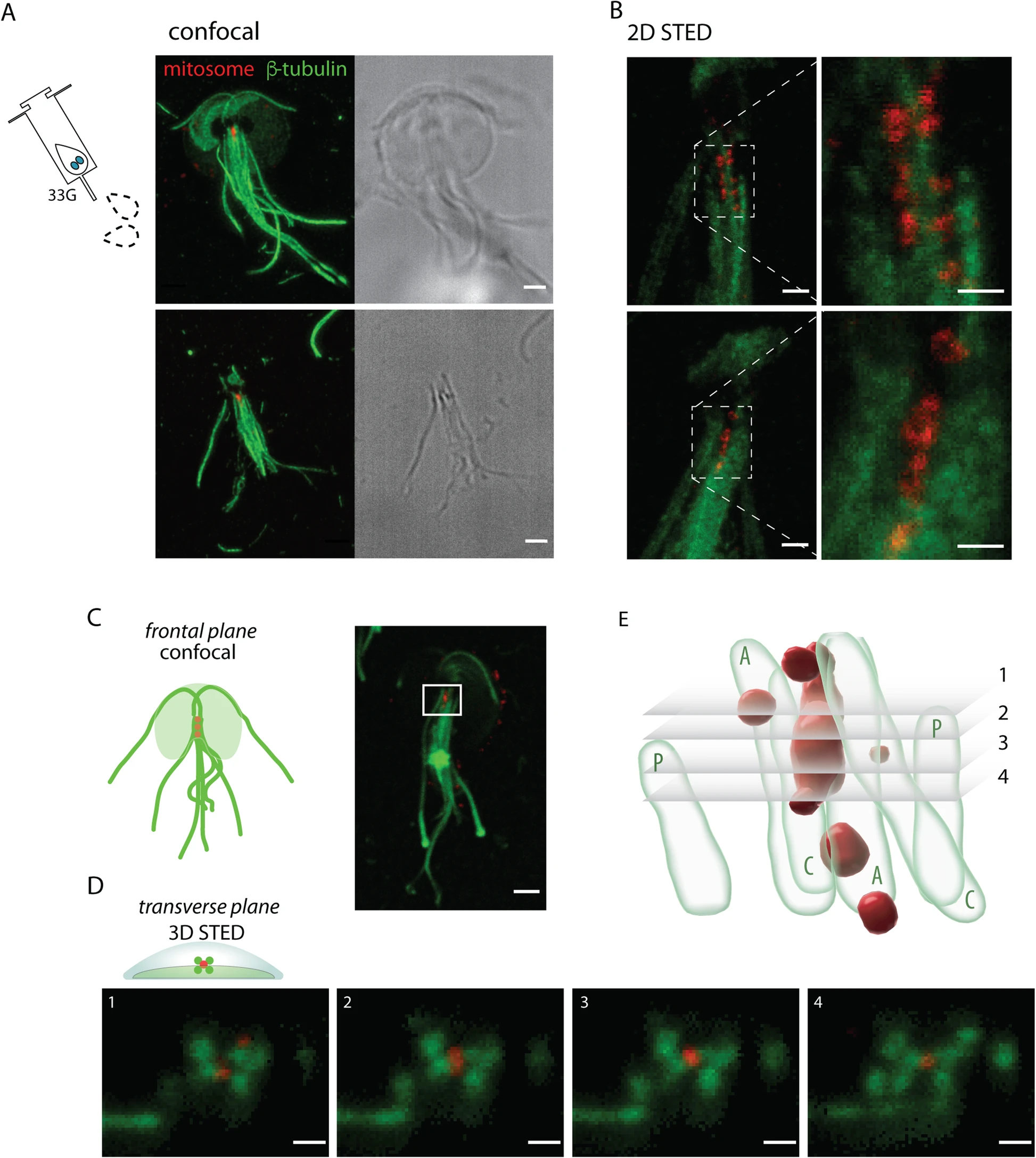
The intestinal parasite Giardia intestinalis carries one of the most reduced mitochondria known, the mitosome. It no longer produces energy, contains no DNA, and retains only a single essential function. We study it alongside other mitochondrion-related organelles to understand how mitochondria evolved.
Iron-Sulfur Clusters: The Function the Organelle Retained
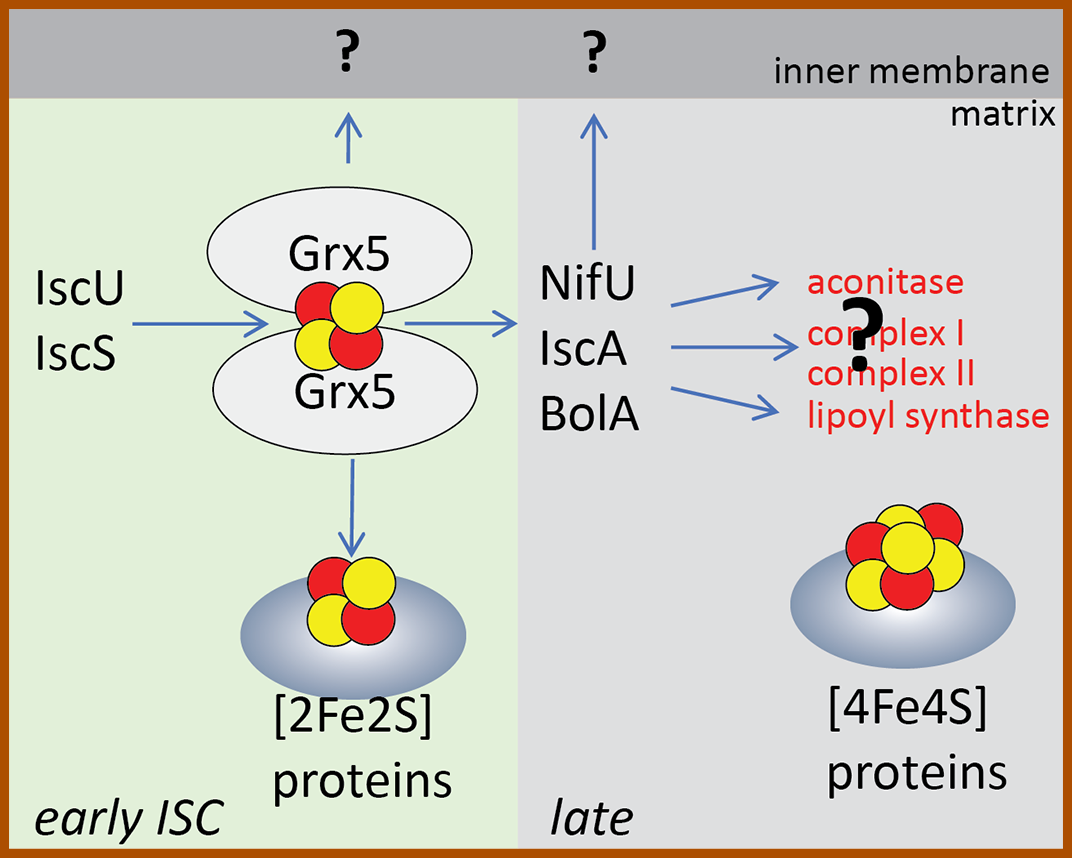
Although the mitosome has lost most mitochondrial activities, it has retained the assembly of iron-sulfur clusters, ancient cofactors required by a wide range of essential proteins. This single conserved function is also the clearest evidence of the organelle’s mitochondrial origin. We study how this assembly machinery operates and how it has been modified in organisms adapted to life without oxygen.
Protein Import: Building Organelles from the Outside
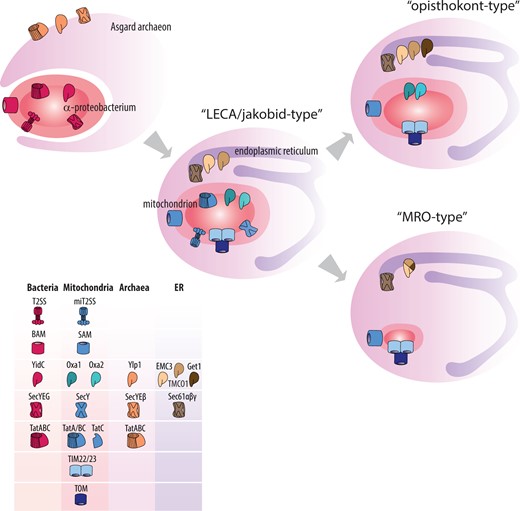
A mitochondrion synthesises almost none of its own proteins and must import several hundred of them from the surrounding cell. The machines that transport these proteins across its membranes descend from the bacterium that gave rise to the mitochondrion. We examine how these import systems have evolved across the diversity of eukaryotes, including their simplification and reorganisation in the most reduced organelles.
Pathogens and the Tools to Study Them
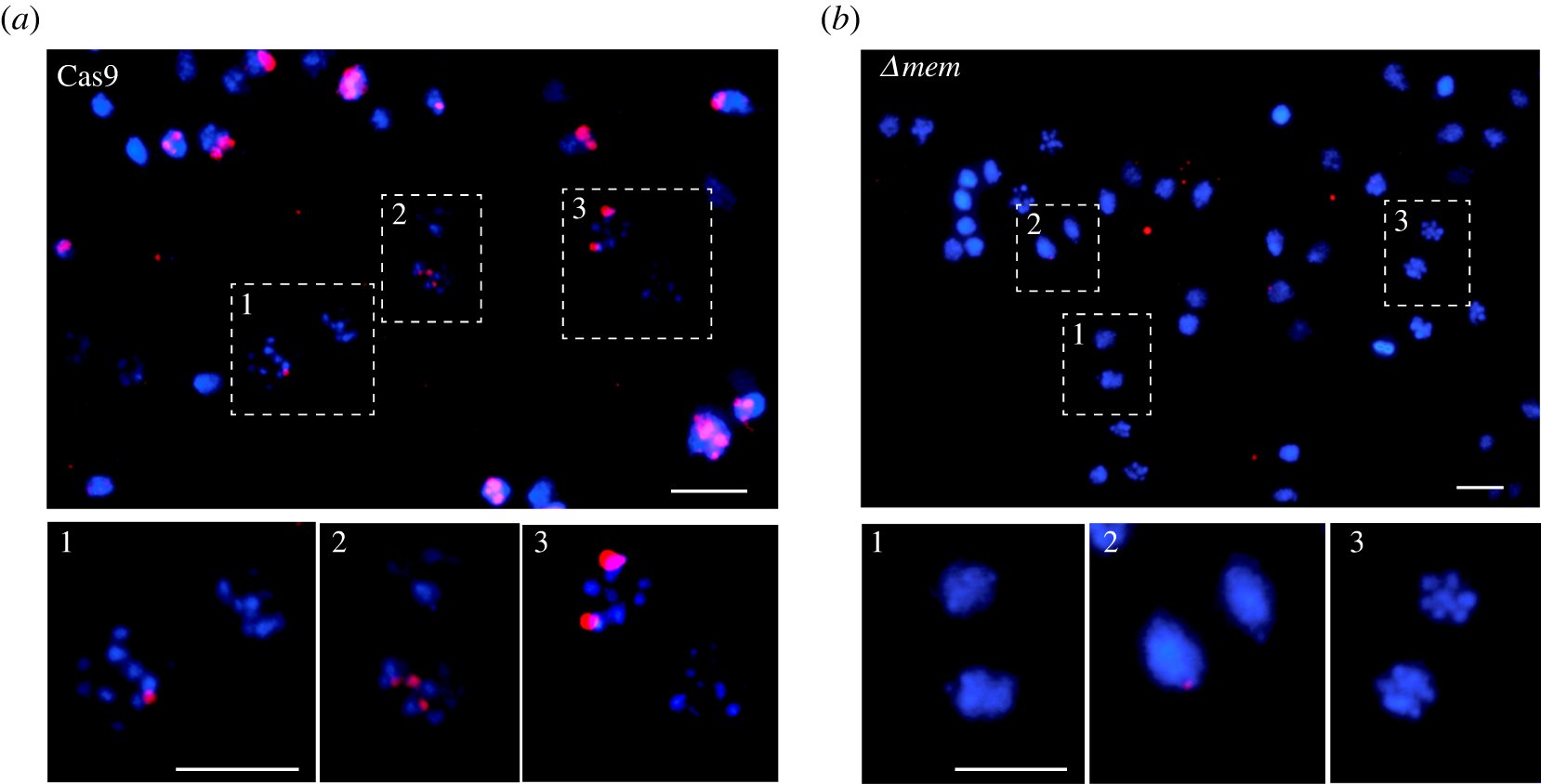
Several of the organisms we work with are human pathogens, including Giardia, a common cause of diarrhoeal disease, and Naegleria fowleri, a rare but often fatal cause of brain infection. Investigating them requires methods to manipulate their genomes, and we develop genetic tools such as CRISPR/Cas9 editing for the tetraploid genome of Giardia. These approaches allow us to connect fundamental cell biology with the mechanisms by which these organisms cause disease.
Tail-Anchored Protein Targeting
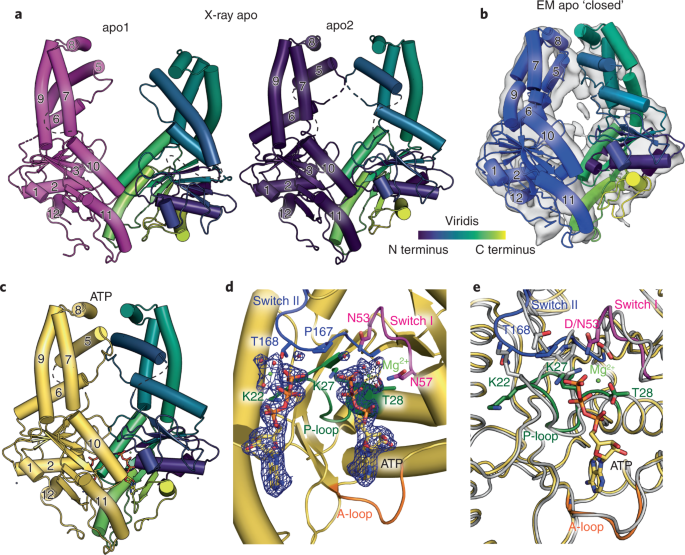
Tail-anchored proteins are membrane proteins held in place by their final segment of amino acids, which prevents them from reaching their target membrane unassisted. A dedicated targeting factor, Get3, binds these proteins and delivers them to the correct destination. We have contributed to defining the structural basis of the Get3 catalytic cycle, and this pathway is currently an active area of research in the laboratory.
The Evolution of the Mitochondrion
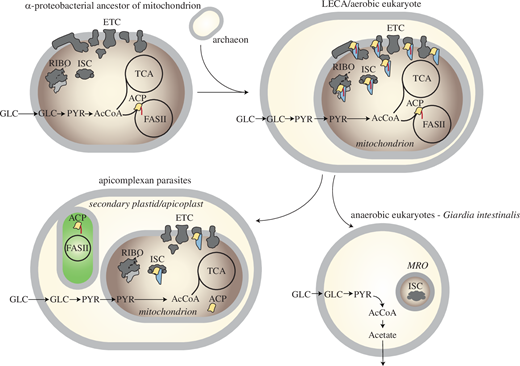
The individual projects in the laboratory contribute to a broader question: how the mitochondrion originated, diversified, and in rare cases was lost entirely. We have taken part in the study of eukaryotes that lack a mitochondrion, traced the bacterial ancestry of organelle machinery, and continue to reconstruct the early evolutionary history shared by all eukaryotic cells. This wider perspective connects the work of the laboratory, from the organelle of a single parasite to the origin of complex life.